
01
The Story of Art
Gombrich's astonishing achievement — a coherent, readable history of art from cave paintings to the twentieth century, written for everyone. Published in 1950, it has never been superseded as the first book any serious student of art should read.
Find this book →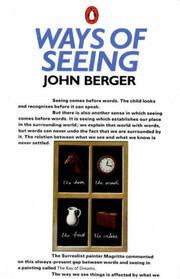
02
Ways of Seeing
Berger's four essays and three purely visual sequences dismantled how we look at European painting — exposing the ideology of perspective, the objectification of the nude, and the way oil paint expressed the possessiveness of wealth. Still radical.
Find this book →
03
The Art Book
Five hundred works by five hundred artists arranged alphabetically — a democratic, provocative way of presenting art history that puts Vermeer next to Velázquez and Basquiat next to Bellini. A wonderful book to open at random.
Find this book →
04
The Shock of the New
Hughes's chronicle of modern art from Impressionism to the 1980s is the most vivid and intellectually honest account of modernism's ambitions and failures ever written. His prose is as vivid as the paintings he describes.
Find this book →
05
Abstract Expressionism
The authoritative scholarly study of the New York School — tracing the development of Pollock, de Kooning, Rothko, and Kline from the late 1940s through the 1960s. Anfam is the leading scholar in this field.
Find this book →
06
Vermeer
Published to accompany the historic Rijksmuseum retrospective, this catalogue gathers almost all of Vermeer's known works in spectacular reproduction. The definitive visual encounter with one of painting's most mysterious and perfect careers.
Find this book →
07
Caravaggio: The Complete Works
Every surviving work by Caravaggio reproduced in full, with scholarly essays on his life, technique, and revolutionary use of chiaroscuro. The essential visual document for understanding the painter who made darkness sacred.
Find this book →
08
Looking at Picasso
Karmel's close readings of Picasso's major works reveal the complex web of art-historical sources, formal innovations, and personal obsessions behind the apparent spontaneity of the pictures. A model of engaged art-historical analysis.
Find this book →
09
Jean-Michel Basquiat
The most comprehensive and thoughtful monograph on Basquiat — placing his work in the context of Black cultural life, the New York art world of the 1980s, and his complex engagement with art history. Corrects many of the myths.
Find this book →
10
Henri Matisse: The Cut-Outs
The definitive catalogue of Matisse's late cut-out works, published for the Tate Modern and MoMA retrospective. These papers découpés, made when Matisse was too ill to paint, are among the most joyful and visually radical works of the twentieth century.
Find this book →
11
Impressionism
A comprehensive survey of the Impressionist movement — its origins in Barbizon painting, its development through Monet, Renoir, Pissarro, and Morisot, and its international spread. Essential for understanding why these pictures still stop us cold.
Find this book →
12
Georgia O'Keeffe: To See Takes Time
A focused study of O'Keeffe's drawing practice, revealing how her disciplined attention to natural forms informed the large-scale paintings for which she is famous. Shows why O'Keeffe was a more rigorous and ambitious artist than her popular image suggests.
Find this book →
13
Van Gogh: The Complete Paintings
Every painting Van Gogh completed, reproduced in chronological sequence — allowing the reader to trace the extraordinary acceleration of his development in the final decade of his life. The essential visual companion to any study of Van Gogh.
Find this book →
14
Reading Basquiat
A scholarly analysis of Basquiat's visual language — his use of text, his engagement with African American history, his citations of medical and legal authority. Saggese brings an art historian's rigor to work that is often discussed more in terms of biography than artistic practice.
Find this book →
15
Leonardo da Vinci
Isaacson's sweeping biography of Leonardo uses the newly transcribed notebooks to portray a mind so curious it could barely finish anything. A compelling account of genius as a form of restless, joyful investigation.
Find this book →
16
After Impressionism
The catalogue for the National Gallery's landmark exhibition exploring what happened after the Impressionists — tracing the paths toward Fauvism, Cubism, and Expressionism through key works by Cézanne, Seurat, Gauguin, and Van Gogh. Beautifully produced.
Find this book →
17
The Art of the Renaissance
A concise and authoritative overview of Italian Renaissance painting, sculpture, and architecture from Giotto to Michelangelo. Clear, well-illustrated, and surprisingly un-dry for a survey of such familiar territory.
Find this book →
18
Abstract Expressionism (Royal Academy)
The Royal Academy's magnificent exhibition catalogue presenting Abstract Expressionism as an international phenomenon rather than an exclusively American story. Includes essays on Brazilian, Japanese, and European parallels.
Find this book →
19
Andy Warhol
A scholarly examination of Warhol's art that takes the work seriously on its own terms — exploring his use of silk-screen, repetition, and celebrity not as cynical provocation but as genuine formal inquiry. A necessary corrective to the mythology.
Find this book →
20
Frida Kahlo: The Complete Paintings
All of Kahlo's known paintings gathered in a single volume, with scholarly apparatus that situates each work in her life and in Mexican cultural history. An overwhelming visual encounter with one of the most intensely personal bodies of work in twentieth-century art.
Find this book →