
01
Lucy: The Beginnings of Humankind
Johanson's account of discovering AL 288-1 in the Afar desert in 1974 — a 3.2-million-year-old Australopithecus — reads like a scientific thriller. The discovery and the book both transformed how we understand human origins.
Find this book →
02
Lucy's Legacy
Johanson's update on the Lucy discovery and its implications for understanding hominin evolution over the three decades following the 1974 find. Incorporates new fossil discoveries and genetic evidence that have complicated and enriched the original picture.
Find this book →
03
Neanderthal Man
The memoir of the Nobel Prize-winning geneticist who extracted ancient DNA from Neanderthal bones and discovered that modern humans carry Neanderthal genes — proof that the two species interbred. A thrilling account of a revolution in how we understand our relatives.
Find this book →
04
Kindred
The most comprehensive and empathetic portrait of Neanderthals ever written — drawing on the full range of archaeological evidence to show that they were sophisticated, culturally complex beings who deserve to be understood on their own terms. A paradigm shift.
Find this book →
05
Almost Human
The story of the discovery of Homo naledi — a previously unknown hominin found deep in a South African cave system — and the unconventional excavation that brought hundreds of bones to light. Berger recounts a genuine scientific adventure.
Find this book →
06
Fossil Men
The narrative account of the fifteen-year investigation that produced Ardi, the 4.4-million-year-old Ardipithecus fossil that challenged every assumption about the last common ancestor of humans and chimpanzees. Science journalism at its finest.
Find this book →
07
The Story of the Human Body
Lieberman traces the evolutionary history of the human body — our upright posture, our large brains, our reduced body hair — and argues that many modern diseases are the result of living in environments our bodies were never designed for. Revelatory and practically important.
Find this book →
08
Exercised
Lieberman challenges the fitness industry's assumptions by asking what evolutionary biology tells us about how human bodies are actually adapted to move. The answer — that rest is as natural as activity, and that exercise is a cultural invention — is both counterintuitive and liberating.
Find this book →
09
Masters of the Planet
Tattersall's survey of the fossil evidence for human evolution focuses on the crucial question of why Homo sapiens alone survived while all other hominins went extinct. His answer involves the emergence of symbolic thinking and language.
Find this book →
10
Lone Survivors
The Natural History Museum's leading paleoanthropologist presents the evidence for the Out of Africa model of modern human origins — how a small population left Africa around 60,000 years ago and replaced all other human populations. Clear, balanced, and authoritative.
Find this book →
11
The Third Chimpanzee
Diamond's early popular work asks what makes humans different from our closest relatives — finding the answers not in our brains alone but in our sexuality, art, language, and capacity for genocide. A provocative comparative zoology of Homo sapiens.
Find this book →
12
The Human Advantage
A neuroscientist discovers that the human brain has far more neurons than any other primate — and argues that this advantage came from cooking, which unlocked the caloric energy necessary to grow such a metabolically expensive organ. A genuinely original argument.
Find this book →
13
The Ape That Understood the Universe
An evolutionary psychologist examines human behavior through the lens of natural selection — covering language, culture, morality, art, and religion as adaptations. The most accessible and comprehensive introduction to evolutionary psychology currently available.
Find this book →
14
Our Inner Ape
De Waal contrasts the chimpanzee model of dominance and aggression with the bonobo model of empathy and sexual reconciliation, arguing that humans contain both and that our social behavior is correspondingly ambivalent. Elegant and thought-provoking.
Find this book →
15
Becoming Human
A concise, beautifully written survey of human evolution from our first bipedal ancestors through the emergence of Homo sapiens. Tattersall writes with the authority of a career spent with the fossils and the skill of a born communicator.
Find this book →
16
Rethinking Human Evolution
Schwartz challenges the standard phylogenetic assumptions of paleoanthropology, arguing that the field has been too quick to accept continuity between fossil species. An important critical corrective to mainstream narratives.
Find this book →
17
Bones of Contention
The political and personal conflicts that have shaped the interpretation of human fossils — from Piltdown to the discovery of Homo habilis. Lewin reveals the surprisingly human dimensions of a discipline devoted to studying ancient humanity.
Find this book →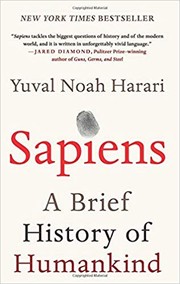
18
Sapiens
Harari's sweeping narrative of human history from the cognitive revolution to the present uses paleoanthropology as its foundation before extending into history and speculation. Controversial among specialists, it is the most widely read book about human evolution of the past decade.
Find this book →
19
The Dawn of Everything
Graeber and Wengrow demolish the standard narrative of human social evolution — arguing that early human societies were far more politically sophisticated, experimental, and diverse than the hunter-gatherer cliché suggests. A provocative and profoundly hopeful reinterpretation.
Find this book →
20
Origins
Dartnell traces the deep geological and ecological history of the Earth to explain why human civilization arose where and when it did — in the particular landscapes shaped by plate tectonics, ice ages, and ocean currents. An original perspective on our origins.
Find this book →