
01
Lectures on Literature
Nabokov's university lectures on Austen, Dickens, Flaubert, Kafka, Proust, and Stevenson are models of close reading — detailed, opinionated, and lit by a novelist's attention to how style creates reality. He changed how generations of students read.
Find this book →
02
The Art of the Novel
Kundera's essays on Cervantes, Rabelais, Kafka, Musil, and the central European novel tradition argue that the novel's vocation is to explore the ambiguity that ideologies deny. Essential for understanding what European fiction was trying to do.
Find this book →
03
How Fiction Works
Wood's anatomy of the novel — covering voice, character, detail, and the free indirect style that allows a narrator to inhabit a character's consciousness — is the most useful critical text for both writers and serious readers. A book about technique that is never merely technical.
Find this book →
04
The Western Canon
Bloom's defense of aesthetic value against the political criticism of his time lists twenty-six authors he considers central to the Western literary tradition and argues fiercely for why they matter. Provocative, learned, and exhilarating whether or not you agree with the argument.
Find this book →
05
The Possessed
Batuman's adventures with Russian literature — in the archives, at conferences, in the decaying apartments of Soviet scholars — are both hilarious and genuinely illuminating about why Dostoevsky, Tolstoy, and Babel still matter. The best book about being obsessed with Russian fiction.
Find this book →
06
Six Memos for the Next Millennium
Calvino's final five Harvard lectures — on lightness, quickness, exactitude, visibility, and multiplicity — are his last gift to literature: a series of values that any serious writer might aspire to and any serious reader might demand. The sixth memo, on consistency, was never written.
Find this book →
07
Aspects of the Novel
Forster's Cambridge lectures from 1927 introduce the basic elements of fiction — story, plot, character, fantasy, prophecy, pattern, and rhythm — with a novelist's practicality and a humanist's warmth. The most useful introductory book on the novel ever written.
Find this book →
08
The Dyer's Hand
Auden's miscellany of criticism, lectures, and meditations ranges from Shakespeare and Cervantes to opera, detective fiction, and the nature of the creative act. Some of the finest English prose of the twentieth century applied to the question of why literature matters.
Find this book →
09
The Common Reader
Woolf's essays on reading — on the pleasures of anonymous literature, on how one should read a book, on the Greek spirit — are themselves works of literature. She writes about reading as a practice of living rather than acquiring knowledge.
Find this book →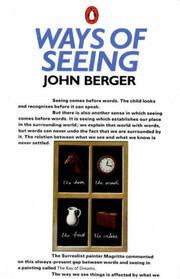
10
Ways of Seeing
Berger's four essays and three purely visual sequences dismantled how we look at European painting — exposing the ideology of perspective, the objectification of the nude, and the way oil paint expressed the possessiveness of wealth. Still radical.
Find this book →
11
The Anatomy of Influence
Bloom's late study of influence traces how Shakespeare, Dante, Milton, Whitman, and Dickinson shaped the writers who came after them — arguing that the anxiety of influence is the hidden engine of literary creativity. A summary and deepening of his life's work.
Find this book →
12
On Writing
King's memoir and manual of craft covers his childhood reading, his years of rejection, his alcoholism, and the near-fatal accident that interrupted his writing — alongside practical wisdom about vocabulary, plot, and the discipline of daily writing. Unexpectedly moving.
Find this book →
13
The Bright Book of Life
Bloom's final critical work surveys the novels and stories he loves most — from Turgenev and Austen through Faulkner and Beckett — as a testament to the redemptive power of fiction in an age of screen culture. Written with the urgency of a last reckoning.
Find this book →
14
Professing Criticism
Guillory's account of the rise and transformation of literary study in American universities is the most rigorous analysis of what the discipline has been for and what it should become. Essential reading for anyone who has studied or teaches literature.
Find this book →
15
Essays Critical and Clinical
Deleuze's essays on Melville, Kafka, Lawrence, Lewis Carroll, and Sacher-Masoch treat literature as a practice of diagnosis — asking what health or sickness a writer's language produces. An extreme and exhilarating approach to literary criticism.
Find this book →
16
Against Interpretation
Sontag's collection of essays from the 1960s argued that criticism was suffocating art with meaning and called for an erotics of attention to the work itself. Her essays on camp, science fiction, and theatre remain essential documents of a cultural moment.
Find this book →
17
The Routledge Companion to the Philosophy of Literature
A scholarly anthology covering the main questions in philosophical aesthetics as they apply to literature — representation, interpretation, emotional response, and ethical criticism. The essential reference for graduate study in literary theory.
Find this book →
18
A History of Western Philosophy
Russell's opinionated survey of philosophy from the pre-Socratics to Logical Positivism is one of the most elegantly written works of intellectual history ever produced. Included here as a reminder that philosophy and literature have always been inseparable.
Find this book →
19
The Art of the Short Story
An anthology of short fiction paired with essays by the authors about their craft — creating an unusually direct dialogue between practice and reflection. Gioia's selection is wide, his introductions illuminating.
Find this book →
20
What Is World Literature?
Damrosch proposes that world literature is not a fixed canon of great books but a mode of circulation and reading — texts that gain meaning when read across cultural and linguistic boundaries. A theoretical framework that liberates the curriculum.
Find this book →