
01
Meditations
The private notebook of a Roman emperor — never intended for publication — containing Stoic reflections on duty, impermanence, and how to live well in the face of power and death. Read continuously for two thousand years for good reason.
Find this book →
02
The Nicomachean Ethics
Aristotle's sustained inquiry into the nature of the good life — what happiness is, what virtue requires, and why friendship matters — remains the most practically useful work of moral philosophy ever written. The foundation of Western ethics.
Find this book →
03
Being and Time
Heidegger's dense, demanding masterwork attempts to reconfigure philosophy itself around the question of Being — our mortality, our thrownness, and our existence in time. Notoriously difficult but impossible to ignore for anyone serious about philosophy.
Find this book →
04
The Structure of Scientific Revolutions
Kuhn's argument that science does not progress by accumulation but by periodic revolutionary overthrows — paradigm shifts — transformed how scholars understand both science and knowledge. One of the most cited academic books of the twentieth century.
Find this book →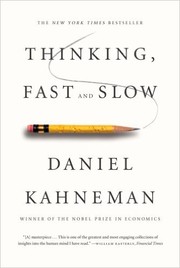
05
Thinking, Fast and Slow
Kahneman synthesizes decades of research in behavioral economics and cognitive psychology to show how two systems of thinking — fast and intuitive versus slow and deliberate — shape our judgments and choices. Genuinely changed how many people understand their own minds.
Find this book →
06
The Human Condition
Arendt's analysis of labor, work, and action as the three fundamental modes of the active life offers a profound account of public life, political freedom, and what it means to be genuinely human. Her most systematic and enduring philosophical work.
Find this book →
07
The Order of Things
Foucault's archaeology of the human sciences argues that knowledge is organized by hidden structural codes that have changed dramatically over history. Difficult, brilliant, and still among the most important works of twentieth-century thought.
Find this book →
08
Justice
Sandel's lucid survey of the major theories of justice — from Bentham and Kant to Rawls and Aristotle — applied to contemporary moral dilemmas. Based on the most popular course in Harvard's history, it makes political philosophy genuinely accessible.
Find this book →
09
On Beauty and Being Just
Scarry's elegant essay argues that the experience of beauty and the practice of justice are connected — that encounters with the beautiful educate us toward fairness by temporarily displacing the self. One of the most beautiful arguments for why beauty matters.
Find this book →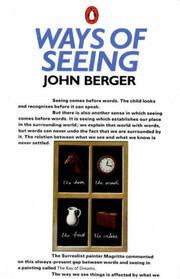
10
Ways of Seeing
Berger's four essays and three purely visual sequences dismantled how we look at European painting — exposing the ideology of perspective, the objectification of the nude, and the way oil paint expressed the possessiveness of wealth. Still radical.
Find this book →
11
Simulacra and Simulation
Baudrillard's argument that contemporary culture has lost its grip on the real — replacing it with simulations without originals — was made famous by The Matrix but is far stranger and more serious than that film suggests. A disturbing diagnosis of the media age.
Find this book →
12
The Second Sex
De Beauvoir's monumental analysis of the situation of women — how femininity is constructed by the culture rather than given by nature — inaugurated second-wave feminism and remains a foundational text of existentialist philosophy. Still radical.
Find this book →
13
Plato at the Googleplex
Goldstein imagines Plato brought into the present to argue with neuroscientists, cable news pundits, and self-help gurus — using him to make serious points about why Platonic philosophy is still urgently relevant. Brilliant and funny.
Find this book →
14
Critique of Pure Reason
Kant's attempt to establish the conditions under which knowledge is possible — showing that space, time, and causality are structures of the mind rather than features of things in themselves — is the pivot of modern philosophy. Formidable but irreplaceable.
Find this book →
15
Gödel, Escher, Bach
Hofstadter's extraordinary exploration of self-reference, consciousness, and formal systems — using Bach's musical structures, Escher's visual paradoxes, and Gödel's incompleteness theorems as interlocking mirrors — is one of the most ambitious popular books ever written.
Find this book →
16
What Does It All Mean?
Nagel's shortest and most accessible introduction to philosophy covers the main problems — knowledge, other minds, free will, justice, and the meaning of life — with the clarity and intellectual honesty that characterize all his work. The ideal first philosophy book.
Find this book →
17
A History of Western Philosophy
Russell's opinionated survey of philosophy from the pre-Socratics to Logical Positivism is one of the most elegantly written works of intellectual history ever produced. Included here as a reminder that philosophy and literature have always been inseparable.
Find this book →
18
Thus Spoke Zarathustra
Nietzsche's visionary prose poem — announcing the death of God, the will to power, and the eternal return — is one of the strangest and most generative books in the philosophical tradition. Not a treatise but a provocation that has never stopped provoking.
Find this book →
19
Ethics
Spinoza's extraordinary treatise presents a complete philosophical system — metaphysics, epistemology, and moral psychology — in the form of Euclidean proofs. His argument that God and Nature are identical, and that freedom lies in understanding necessity, is as radical today as it was in 1677.
Find this book →
20
Sophie's World
A Norwegian novel that presents the entire history of Western philosophy through a teenage girl's encounters with a mysterious tutor. Widely used in schools, it remains the most accessible introduction to philosophical thought ever written.
Find this book →